QUANTUM FRAME
LITTLE SOUND MACHINES
LITTLE SOUND MACHINES
2019 -
2018
2018
The Quantum Frame is a mechanical installation that speculates on the future of quantum computing and what that may hold for machine intelligence and consciousness. The installation takes the form of the present day quantum computer, with a tubular central chamber, where machine learning data drives the mechanical movements of an electromagnetic structure, breathing life into the metallic framework, a ghost in the machine.
The current version of the frame is self-generative. But the artist hopes that once time-sharing of the quantum computer is open to the general public, that the installation may be able to talk with the quantum machine directly via data transfer.
This piece is currently on-going. Magnetic field experimentation and research with ferrofluid are currently in--progress.
The Little Sound Machines is a sound installation consisting of a series of both mechanical and digital machines that are connected to an AI network. Three AIs form the central brain of the network. Through learning from and influencing each other, the AIs construct the musical phrases that are then played out through a series of sound-generating machines. The music generated by the AI is also presented on a series of television screens that visualizes both the AI data and audio, as well as machine logic and behavior to the audience.
This piece proposes a new mode of music creation in the age of intelligent machine. Through experimentation, the artist presents an exploration of new musical interfaces that erases the composer from the equation, to present a purely machine-made performance.
The Little Sound Machines are made from found objects, up-cycled and spare parts.
The Little Sound Machines is a sound installation consisting of a series of both mechanical and digital machines that are connected to an AI network. Three AIs form the central brain of the network. Through learning from and influencing each other, the AIs construct the musical phrases that are then played out through a series of sound-generating machines. The music generated by the AI is also presented on a series of television screens that visualizes both the AI data and audio, as well as machine logic and behavior to the audience.
This piece proposes a new mode of music creation in the age of intelligent machine. Through experimentation, the artist presents an exploration of new musical interfaces that erases the composer from the equation, to present a purely machine-made performance.
The Little Sound Machines are made from found objects, up-cycled and spare parts.
LITTLE SOUND MACHINES
2018
The Little Sound Machines is a sound installation consisting of a series of both mechanical and digital machines that are connected to an AI network. Three AIs form the central brain of the network. Through learning from and influencing each other, the AIs construct the musical phrases that are then played out through a series of sound-generating machines. The music generated by the AI is also presented on a series of television screens that visualizes both the AI data and audio, as well as machine logic and behavior to the audience.
This piece proposes a new mode of music creation in the age of intelligent machine. Through experimentation, the artist presents an exploration of new musical interfaces that erases the composer from the equation, to present a purely machine-made performance.
The Little Sound Machines are made from found objects, up-cycled and spare parts.
L(AI)BOR
machine learning, oil, canvas, performance, artifacts (studio equipment and materials)
2026
Sol LeWitt posited that "The idea becomes a machine that makes the art." In the computational present, this machine has transitioned from a conceptual metaphor to a literalized, algorithmic entity. L(AI)bor is a procedural and performative artwork. It interrogates the shifting topographies of authorship and labor. The work positions the machine as a collaborative cognizer rather than a mere instrument to probe the uneasy tension between aesthetics and algorithm. The piece stages a performance between the artist and an AI agent through a cybernetic feedback loop. Through reflexive collaboration, the artwork examines how conceptual and procedural authority is delegated to a machine-learning system. This inquiry moves beyond the paradigm of AI as an assistant and frames the system as a co-producer of meaning.
This work originated through a month-long performative residency that unfolded within a post-digital factory space constructed by the artist where the boundaries between artistic creation, computational procedure, and operation collapse into one another. The space is not a neutral container for aesthetic experimentation. It is an intentionally structured environment designed to test how production is reorganized. The daily workflow mimics an industrial workplace ritual. The artist wears a workman’s uniform and punches in on a timecard. A customized GPT model produces a new set of textual painting instructions each workday. The artist responds through embodied interpretation and material execution. The studio space becomes a site where the boundaries between human intent and machine logic blur into a singular operational flow, highlighting the industrialization of creative labor.
The artist executes these tasks through material negotiation and iterative documentation. This collaboration results in paintings and etched PCBs. The paintings capture the human interpretive response to machine logic. The PCBs serve as physical manifestations of the underlying algorithmic structures. The L(AI)bor agent provides probabilistic propositions. These demand tacit, materially negotiated forms of human response. Through recursive cycles of instruction, enactment, and reflection, the studio becomes a field of operational co-production. Thought is made visible as a practice distributed across humans and machines. Execution is cognitive, not mechanical. Material resistance is generative, not obstructive. The physical friction of the medium provides essential feedback for the system.
The artwork no longer resides solely in the stability of an idea or the mechanics of execution. It exists within an operational ecology. Concept, code, perception, and embodied action co-produce meaning. Instruction constitutes a relationality between human and machine. A co-modeling emerges from enacted studio practice. Several propositions become evident. The concept is generated, not declared. Instruction is dynamic, not stable. Authorship is distributed, not centralized. L(AI)bor proposes art as a site where thought becomes operational. It is a site where the operation itself begins to think. This ontological shift moves art toward the process of algorithmic becoming.


L(AI)bor performance stills, artist residency at CompleX, Shanghai, 2025.
L(AI)bor, video, artist residency at CompleX, Shanghai, 2025. 3min 31sec.


Gird Flux, full (left), details (right), 2025

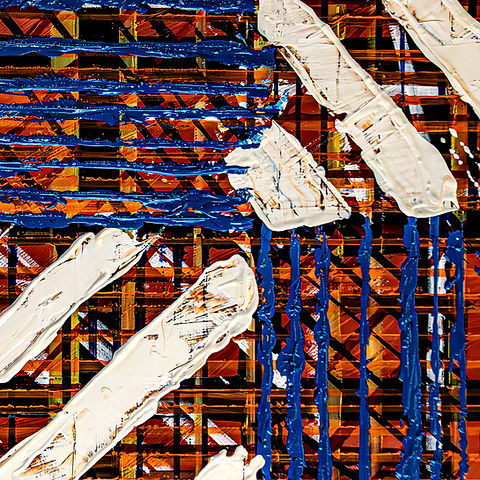
Gird Intensity, full (left), details (right), 2025


Blue Grid, full (left), details (right), 2025


Gird Shift, full (left), details (right), 2025


Disrupting Order Black and White, full (left), details (right), 2025


Disrupting Order Color, full (left), details (right), 2025


Gird Void Collision, full (left), details (right), 2025


Rhythmic Grid, full (left), details (right), 2025


Optical Tension, full (left), details (right), 2025

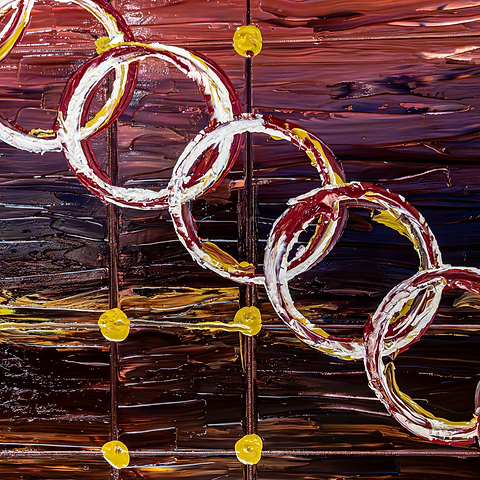
Dynamic Sunset over Dessert Landscape, full (left), details (right), 2025